Category: Cases/Blog

Home Category: Cases/Blog

An enlarged prostate, also known as benign prostatic hyperplasia (BPH), is a common condition can occur among aging men. Enlarged prostate occurs when the prostate gland undergoes non-cancerous growth, causing troublesome urinary symptoms.

Naturally, a lot of men diagnosed with the condition wonder how enlarged prostate is treated. This blog covers some of the treatment options that are available, however your urologist will be able to advise you on which treatments are most appropriate for your condition based upon your individual patient factors.

How enlarged prostate is treated – What is the prostate?

Some of the most common questions our male patients have are around how enlarged prostate is treated. The prostate gland is located just below of the bladder, in front of the rectum. It is about the size of a walnut and surrounds the urethra. The function of the prostate is to produce part of the fluid the makes up semen.

Fortunately, there are various treatment options available to alleviate or improve the uncomfortable symptoms that are caused by an enlarged prostate.

How enlarged prostate is treated – Medical treatment options

One of the ways that enlarged prostate is treated is with pharmaceuticals (medical treatment). Medical treatments include alpha-blockers and 5-alpha reductase inhibitors- the two main classes of drugs used in the treatment of BPH.

Alpha-blockers: These types of medications relax the muscles in the prostate and bladder neck, allowing urine to flow more easily, therefore reducing the symptoms of caused by the enlarged prostate. Commonly prescribed alpha-blockers include tamsulosin, doxazosin, and terazosin.

5-alpha reductase inhibitors: These medications work by blocking the conversion of the hormone testosterone to dihydrotestosterone (DHT). DHT is a hormone that contributes to prostate growth. Finasteride and dutasteride are two examples of 5-alpha reductase inhibitors.

Commonly, combination therapy using medications that contain both alpha-blockers and 5-alpha reductase inhibitors is prescribed.

How enlarged prostate is treated – Minimally invasive procedures

One of the other ways enlarged prostate is treated is with surgical procedures. In cases where medication does not provide adequate relief, if the patient’s symptoms worsen, or the patient does not wish to take medication (due to side effects, cost, or other reasons), minimally invasive surgical procedures may be considered.

Patients who are considering their options are often interested in how enlarged prostate is treated with minimally invasive procedures, due to the efficacy and durability of these treatments.

Some of the common minimally invasive treatments for BPH include:

Transurethral resection of the prostate (TURP): Excess prostate tissue is removed using a special instrument known as a resectoscope, which inserted through the urethra. TURP can provide significant symptom relief for men with an enlarged prostate.

Rezum therapy: this treatment uses thermal energy from water vapour (steam) to ablate the excessive prostate tissue, causing it to shrink. Most patients find significant improvement in their BPH symptoms with Rezum therapy, and in the majority of patients, sexual function is preserved.

Other treatments: Other options for minimally invasive treatments for enlarged prostate include therapies such as HoLEP, greenlight laser, and Urolift. Your urologist can inform you these options with you in detail when having a discussion about how enlarged prostate is treated.

How enlarged prostate is treated – robotic enucleation of the prostate

In some cases of severe prostate enlargement, or in instances where other treatments have not provided adequate relief, surgical intervention may be required. Robotic-assisted enucleation of the prostate is a keyhole procedure that is performed with the assistance of robotic instruments, for the definitive treatment of BPH.

Robotic-assisted enucleation of the prostate replicates the traditional open surgery, but uses very small robotic instruments via keyhole incisions to remove the obstructive prostate tissue.

How enlarged prostate is treated – Discuss your options

If you have been diagnosed with BPH, then you will want to know how enlarged prostate is treated.  An enlarged prostate can significantly impact a man’s quality of life, affecting urinary function and overall well-being, so early diagnosis and prompt treatment are essential to the effective management of the condition.

There are various treatment option available, ranging from medical therapy to minimally invasive procedures and robotic surgery, to address the symptoms of BPH.

If you are experiencing urinary symptoms, you should consult a urologist for an accurate diagnosis of your condition. If you have BPH, your urologist will discuss how enlarged prostate is treated, and determine the most suitable treatment plan for your specific situation. With Melbourne Urology Centre’s specialised care, men with BPH can find relief and lead a more comfortable life.
Prostate cancer is a significant men’s health concern. Prostate cancer in Australia impacts the lives of many men and their families. It is the most common cancer among Australian men, therefore having an understanding of the prevalence, risk factors, screening guidelines, and available treatments for this disease is important.

This article gives an overview of prostate cancer in Australia.

Prostate Cancer in Australia – Prevalence and Incidence

Prostate cancer In Australia is a leading cause of cancer-related deaths men. According to Cancer Council, an estimated 24,200 Australian males were diagnosed with prostate cancer in 2022. The average age at diagnosis was 69 years old.

Although the incidence of prostate cancer in Australia is high, the survival rate has improved significantly over the years due to advancements in early detection and treatment options.

Whilst most men won’t die from the disease, it remains the second leading cause of cancer death in Australian men.

Prostate Cancer in Australia – Risk Factors

There is ongoing research into the causes of prostate cancer. A number of dietary and environmental factors have already been investigated, however none have yet been proven to cause or prevent prostate cancer.

The risk of developing prostate cancer increases with age; prostate cancer in Australia is up to 1 in 7. Family history is also thought to play a role, as men with close relatives who have had prostate cancer are at higher risk.

Prostate Cancer in Australia – Screening and Early Detection

Prostate-specific antigen (PSA) testing is the most common method used for the early detection of prostate cancer in Australia. PSA is a protein that is produced by the prostate gland, and elevated levels of PSA in the blood can be indicative of the presence of cancer.

The PSA itself does not diagnose prostate cancer, but is often the first test that your doctor will perform. Following your PSA blood test, you may be referred to a urologist for further evaluation, which may include a prostate examination, multiparametric prostate MRI, and MRI-fusion prostate biopsy.

It is recommended that men over the age of 50 speak to their doctor about having a PSA blood test (or men over the age of 45 in instances where there is a family history of the disease).


Prostate Cancer in Australia – Treatment Options

Treatment for prostate cancer in Australia varies depending on the stage of the disease, the overall health of the patient, and the patient’s personal preferences.

In many low-risk cases, active surveillance, where the cancer is carefully monitored without immediate treatment, may be appropriate. Other treatment options include:

  • Surgery: Robotic-assisted radical prostatectomy, where the entire prostate gland and some surrounding tissues are removed
  • Radiation Therapy: this treatment uses high-energy rays to kill cancer cells or stop their growth
  • Systemic treatment: is generally used for advanced cases when the cancer has spread beyond the prostate.


Prostate Cancer in Australia – Melbourne Urology Centre

Prostate cancer in Australia remains a critical health issue that affects thousands of men every year.

The urologists at Melbourne Urology Centre understand that a diagnosis of prostate cancer can be a very stressful and life-changing event. Whilst great surgical outcomes are critical, this is only one component of patient care. To assist in our patients’ recovery, we facilitate (as required): prostate cancer nurse support, psychologist support, pelvic floor physiotherapy and rehabilitation, sexual health management and other survivorship pathways.

If you would like to arrange a consultation with a urologist at Melbourne Urology Centre, please obtain a referral from your GP and telephone our rooms on 1300 702 811.

Learn more: Prostate cancer surgery

People often think of kidney stones as one of the most common and painful urological problems that patients suffer from.

As such, we as Urologists are often asked “what are the first signs of kidney stones?”, by people who are wanting to prevent and understand this painful condition.

Kidney stones are essentially hardened mineral deposits that form in the urinary tract. They form when salts in the urine crystallise and clump together. There are different types of stones that can form, however most are calcium-based. Kidney stones are very common, in fact, the lifetime risk is around one in ten, with men being at higher risk of developing them than women.

After having a kidney stone, the risk of developing another is up to 10% each year!

The first signs of kidney stones often appear when the stone(s) become lodged in the urinary tract, causing inflammation, and sometimes even a blockage.

What are the first signs of kidney stones? Symptoms to recognise:

What are the first signs of kidney stones? Symptoms can vary greatly from person to person, but there are some common symptoms that can indicate the presence of kidney stones.

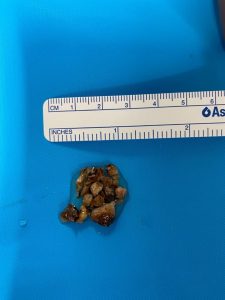
Fragmented kidney stone removed from the patient


The first signs of kidney stones may include pain in the lower back, flank, or in the abdomen. The pain can be quite severe and it may come on suddenly or gradually. The pain can be intermittent or constant, and sometimes it may worsen with movement. In some people, the pain also radiates through the groin area.

Another common sign of kidney stones is pain or discomfort when urinating. This is sometimes accompanied with an urgent or frequent need to urinate, a burning sensation, or pain when beginning urination. Blood in the urine can also be indicative of a kidney stone.

Other first signs of kidney stones can include nausea, vomiting and fever. These symptoms can occur as a result of the body’s response to the presence of a kidney stone, or as a result of an infection or other complication caused by the stone.

What are the first signs of kidney stones? Sometimes, there are none!

It is important to note that not all people who have kidney stones will experience symptoms. In fact, sometimes the stones are incidentally discovered during imaging tests for other purposes, such as on ultrasound or CT scan. In some cases, these stones may be small enough to pass through the urinary tract without causing any pain or discomfort. Larger stones may require treatment to prevent complications such as renal colic.

What are the first signs of kidney stones? Should I be concerned?

If you have been wondering “what are the first signs of kidney stones?” because you have been experiencing some discomfort, or for some other reason you suspect that you may have a kidney stone, it is important that you see your GP or your urologist for an examination. Your doctor will take a thorough medical history, may perform an examination, or order diagnostic tests in order to determine your risk of having a kidney stone.

From there, if you require treatment, an appropriate management plan will be tailored according to your individual circumstances.

What are the first signs of kidney stones? How can I prevent them from forming?

It doesn’t matter whether or not you’ve had stones in the past, rather than waiting for the first signs of kidney stones, there are several steps that you can take in order to reduce your risk in the first place. The most important preventative factor is hydration: making sure that you are drinking enough clear fluids. All types of kidney stones can be prevented by ensuring that the urine is dilute enough. Reducing dietary salt intake and limiting the amount of animal proteins that you consume also helps to prevent kidney stone formation.

What are the first signs of kidney stones? Learn more…

If you are wanting to learn more about what the first signs of kidney stones are, or you would like more information on kidney stones in general, please visit the ‘Kidney Stones’ section on our website.

If you would like to arrange a consultation time with one of our urologists to discuss kidney stone treatment, please contact our rooms on 1300 702 811, or complete the online contact form. Please note that all new patients will require a referral from their GP in order to secure an appointment time.

Let’s Talk About Prostate Biopsy Recovery Time

At Melbourne Urology Centre, we understand that the prospect of undergoing a prostate biopsy can be daunting for some men; some common concerns include sexual function following the procedure, prostate biopsy recovery time, and the outcomes following the procedure.


Having a prostate biopsy is the only definitive way to diagnose prostate cancer in men. As such, for some patients, it is deemed a necessary procedure.

Prostate Biopsy Recovery Time

Our specialist urologists are highly experienced in performing transperineal prostate biopsies. Their skill and  expertise means that our patients benefit from a reduced prostate biopsy recovery time, and minimal to no side effects following the procedure.

What is a prostate biopsy and how is it performed?

Prostate biopsies are now performed as MRI -fusion transperineal prostate biopsies (MRI fusion TPB). This  technique allows the urologist to accurately and comprehensively sample the prostate for cell changes that may be related to prostate cancer or other conditions affecting the prostate.

With the patient placed under anaesthetic, the procedure involves using an MRI image that is fused with a live ultrasound image, to locate particular areas of interest within the prostate, and sample those efficiently.

The transperineal approach eliminates the risk of rectal bleeding (which is a possibility with the traditional rectal biopsy approach), which also significantly reduces the risk of infection/septicaemia.

Prostate biopsy recovery time is generally very brief!

Prostate biopsy recovery time is very brief, with the majority of patients being able to resume their normal activities within just a couple of days. Patients should expect some blood in the urine for the first few days following the procedure. Sometimes this is intermittent. Blood in the semen is also common and might persist for a few weeks. The blood may be bright, new blood, or brownish, old blood.

During your prostate biopsy recovery time, you may also experience some burning and stinging with urination for a day or so following the procedure. This may occur especially if you’ve had a flexible cystoscopy at the time of the biopsy. This does not usually indicate infection, and it can be managed with over-the-counter Ural sachets.

Are there restrictions to activities during the prostate biopsy recovery time?

Since the prostate biopsy recovery time is very brief for most patients, there are very few restrictions on activities. You must not drive for 24 hours following your procedure. Depending on the occupation, most patients can return to work 1-2 days following their biopsy. Sexual activity and heavy lifting should be avoided for 48 hours.

Please contact us to discuss prostate biopsy recovery time, or any other questions that you may
have.

If you would like to discuss having a prostate biopsy in further detail, or perhaps you have further questions about prostate biopsy recovery time, please contact our rooms on 1300 702 811. Our administrative staff will be more than happy to assist you, or if required, book you in for a consultation with one of our urologists.

Please note that we also have comprehensive information available on our website about transperineal prostate  iopsy, including post-operative care instructions and details about prostate biopsy recovery time. Click here https://melbourneurologycentre.com.au/mri-fusion-transperineal-prostate-biospy/

Rezum treatment, otherwise known as Rezum water vapour therapy, is a minimally-invasive procedure that uses radiofrequency-generated steam to treat non-cancerous prostate enlargement (also known as benign prostate hyperplasia, BPH).

Who is the Rezum water vapour therapy suitable for?

Rezum water vapour therapy for BPH treatment is suitable for men who are experiencing troublesome urinary symptoms as a result of their enlarged prostate. These symptoms can include straining to begin urination, a weak urinary stream of urine, urine flow that stops and starts, difficulty with emptying the bladder completely, an increased need to urinate (frequency), increased urgency to urinate, and interruptions to sleep due to the need to urinate frequently during the night (nocturia).

Rezum water vapour therapy may be an suitable solution for men who meet the following criteria:

  • Are experiencing urinary symptoms associated with BPH and prefer a minimally-invasive solution
  • Those who do not wish to use daily medications for their BPH (this might be due to cost, side-effects or inconvenience)
  • Those who want to improve their quality of life to that of what it was prior to the onset of their BPH symptoms.

What are the benefits associated with the Rezum water vapour therapy for BPH?

The Rezum water vapour therapy offers a minimally-invasive, simple and safe solution for treating the symptoms of benign prostate hyperplasia. It offers long-term relief for patients with minimal downtime. Most patients notice a significant improvement in their urinary symptoms within a few weeks following the treatment.

Rezum water vapour therapy eliminates the need for daily medications, which may be costly and inconvenient for some patients.

Another important benefit of the Rezum water vapour therapy, is that it preserves sexual function; traditional surgical procedures for the treatment of BPH may impair sexual function and lead to retrograde ejaculation. With Rezum, this risk is eliminated.

How is Rezum water vapour therapy performed?

Rezum water vapour therapy can be performed as a day surgery, but most patients may be recommended to stay in hospital overnight.

  • The procedure is performed under general anaesthetic.
  • Most patients will have a urinary catheter in place for 3-7 days, due to the swelling of the prostate following the procedure
  • Patients can resume normal activities within 24-28 hours
  • In the first 4-6 weeks following the procedure, patients may experience mild discomfort when urinating, an increased need to urinate, and in some cases small amounts of blood in the urine or the ejaculate.

In most patients, maximal improvement occurs at around 3 months following the Rezum  water vapour therapy.

What are the expected patient outcomes of the Rezum water vapour therapy for BPH treatment?

Most patients report an improvement in their urinary flow, pressure and bladder emptying in as little as two weeks following their Rezum procedure. The bladder symptoms such as urinary frequency, urgency, and nocturia usually take a little longer (up to 3 months) to improve following the treatment.

Where can I have the Rezum water vapour therapy treatment near me?

Dr Shekib Shahbaz and Dr Tony de Sousa of Melbourne Urology Centre pioneered the Rezum water vapour therapy in Victoria. They offer Rezum vapour therapy at various locations throughout Melbourne, and always work with their patients to have them treated as close to home as possible.

Melbourne Urology Centre’s team consults and operates at a number of private hospitals throughout Melbourne metropolitan and regional Victoria. Locations include: St John of God Berwick Hospital, Beleura Private Hospital, Malvern Osler House, Frankston Private Hospital, Mulgrave Private Hospital, Epworth Freemasons, Maryvale Private Hospital, and Kilmore & District Hospital.

Rezum water vapour therapy at Melbourne Urology Centre

If you are interested in discussing your suitability for Rezum water vapour therapy, please do not hesitate to contact our rooms at Melbourne Urology Centre on 1300 702 811. Alternatively, can fill out our online contact form and a member of our administrative team will return your enquiry and assist you to book a consultation. Please be aware that a referral from your GP will be required in order to confirm your appointment time with our urologists.

Rezum is a relatively new, minimally invasive treatment for benign prostatic hyperplasia (also known as BPH or prostate enlargement). In this blog, we’ll take a look at the pros and cons of Rezum treatment, helping you to make a better-informed decision when it comes to treating your BPH.

BPH is one of the most common non-cancerous conditions affecting men worldwide. It is expected that almost 90% of men will have the age-related condition by the time they’re 85 years old. BPH can have a pronounced impact on a man’s quality of life; the enlarged prostate causes numerous urinary symptoms that affect not only the patient, but in many cases their partner too.

Pros and cons of Rezum treatment: Understanding the procedure

In order to be able to discuss the pros and cons of Rezum treatment, it is first necessary to understand a little bit more about the procedure. Rezum treatment for BPH is a relatively new therapy that utilizes water vapour to treat the enlarged prostate tissue.

Rezum treatment is performed under general anaesthetic, using a cystoscope that is inserted via the urethra. There are no incisions involved. A small handheld device is used to direct radiofrequency-generated steam (water vapour) to the enlarged prostate tissue. The steam causes degeneration of the enlarged tissue, which is eventually absorbed by the body’s natural healing processes, leading to shrinking of the prostate.

Once this extra prostate tissue is removed, the urethra opens up, reducing BPH symptoms.

Pros and cons of Rezum treatment: The advantages

When considering the pros and cons of Rezum treatment, the following are clear advantages of this type of therapy for BPH:

  • It is minimally invasive: there are no incisions involved
  • It preserves sexual function: this is a clear advantage over other, more traditional procedures for BPH, that often impair sexual function
  • It offers patients both short-term and long-term outcomes: urine flow, bladder pressure and bladder emptying are generally improved within 2 weeks following the procedure, and urinary urgency, frequency and nocturia are improved within about 3 months, often with complete improvement in urinary symptoms overall for the patient.

Pros and cons of Rezum treatment: The disadvantages

As part of discussing the pros and cons of Rezum treatment, the following disadvantages should be considered and discussed with your urological surgeon:

  • Not all prostates are suitable depending upon the size and anatomy
  • It requires the placement of a catheter for 3-5 days following the procedure, due to the initial swelling of the prostate
  • Some discomfort when urinating may be experienced in the 4-6 week period following the treatment, and this may also be accompanied by blood in the urine or semen (this is similar to other treatments)
  • Rezum cannot be performed on patients who have a penile prosthesis or urinary implant.

Pros and cons of Rezum treatment: Making an informed decision

During your consultation with your urologist, they will go through the pros and cons of Rezum treatment with you, and you will have an opportunity to ask any questions or address concerns that you may have regarding the procedure.

Your urologist will be able to advise you on whether you are a suitable candidate for this minimally invasive procedure to treat BPH, and if not, they will be able to recommend an appropriate treatment for your condition.

More questions about the pros and cons of Rezum treatment?

If you wish to make an appointment to discuss the pros and cons or Rezum treatment, or to discuss your suitability for this procedure with a specialist urologist at Melbourne Urology Centre, please contact us. Our staff can be reached by telephone, or by completing the online booking form. Please note that a referral from your GP will be required in order to confirm your appointment.

If you have been diagnosed with kidney stones, your doctor may recommend that you need to follow a special diet, or at least make some adjustments to your diet.


There is no special kidney stone disease diet that suits everyone. Your urologist will make their recommendations based on your individual condition and the types of stones you’ve been diagnosed with.

Kidney stone disease diet planning varies with stone type

Kidney stone disease diet planning firstly involves your urologist investigating the type of kidney stones that you have. If you have had your stones surgically removed, your urologist may have sent the stones to the laboratory for analysis. You may also be asked to have some blood and urine tests; these tests will look for the presence of particular minerals and other chemical compounds, that can help your urologist to determine the composition of your stones.

kidney stones

Knowing what type of kidney stones you have will assist your doctor in prescribing a treatment and prevention plan for the future. It will also help them to determine a kidney stone disease diet plan for you, should it be required.

Most kidney stones form as a result of dehydration; when the urine becomes concentrated and there is opportunity for salts and minerals to clump together. There are four main types of kidney stones:

1. Calcium stones

These are the most common type of kidney stones. They form when calcium combines with other compounds (commonly oxalate) in the urine.

2. Uric Acid stones

Uric acid stones are also quite common. They tend to occur in people who lose a lot of fluid due to malabsorption, chronic diarrhea, those with diabetes or a metabolic syndrome, or those who eat a very high protein diet and are prone to gout.

3. Struvite stones

These stones are uncommon and usually form in response to infection in the upper urinary tract.

4. Cystine stones

Cystine stones are caused by a rare genetic disorder known as cystinuria, which causes a natural substance (cystine) to leak into the urine.

Hydration is the most important factor in kidney stone disease diet planning

Making sure that you drink plenty of water is the most important factor in preventing kidney stones and planning your kidney stone disease diet. No matter what type of stones you have or have had in the past, if you drink enough water, stones are much less likely to form.

The general rule of thumb is 2L of water per day, although your urologist may recommend that you drink more or less depending on a number of individual factors. You should drink enough water to ensure that your urine is a pale yellow colour.

Kidney stone disease diet for calcium oxalate stones

Calcium oxalate stones are the most common type of stone. Some people with these types of stones might benefit from reducing the amount of oxalate-rich foods in their diet. Foods high in oxalates include peanuts, spinach, silverbeet, chocolate and sweet potato.

Making sure you’re consuming calcium-rich foods alongside oxalate-rich foods can help too; the calcium will bind to oxalate in the stomach, reducing the chances of kidney stones forming. Do not reduce calcium in your diet. Reducing calcium can actually make these types of stones more likely to form! Sticking to the recommended 2-3 servings of dairy products per day is adequate for most people.

Limiting salt is perhaps the most important dietary factor when considering any kidney stone disease diet. Extra sodium in the diet can cause calcium to leak into the urine, increasing the chances of stone formation.

Kidney stone disease diet for uric acid stones

People with uric acid stones may benefit from following a kidney stone disease diet that is high in fresh fruit and vegetables, with limited animal proteins. Red meats and shellfish have higher levels of a naturally occurring compound called purines. High purine intake leads to a higher level of uric acid production; this means a greater acid load for the kidneys to excrete. Higher acid production makes it more likely for uric acid stones to form.

Limiting beer/alcohol can also help to prevent uric acid stones.

Key points for kidney stone disease diet planning:

Your urologist will be able to make specific recommendations for your individual condition when it comes to kidney stone disease diet planning, as there is no ‘one size fits all’.

Some general key points to keep in mind for optimal kidney health include:

  • Remember to drink plenty of fluids, generally at least 2L per day (unless otherwise recommended)
  • Limit your intake of high-oxalate foods
  • Make sure you consume enough calcium
  • Consume a moderate amount of protein
  • Avoid high salt foods and don’t add extra salt to your diet
  • Avoid taking extra calcium or vitamin C supplements unless your doctor recommends that you do so.

Still curious about kidney stone disease diet planning?

If you have more questions around kidney stone disease diet planning, it is best to speak to your urologist. They will be able to offer the best advice to suit your individual circumstances. Please get in touch with our rooms to schedule your consultation.

Here at Melbourne Urology Centre, our urological specialists, Dr. Shekib Shahbaz and Dr. Tony de Sousa are highly experienced in treating kidney stone disease. They provide a wide range of kidney stone disease treatment options for their patients, ensuring that each individual receives a tailored treatment plan that reflects their unique circumstances.

Kidney stones are very common. Around 1 in 10 people will experience kidney stone disease at some point in their lifetime.

Understanding some of the common kidney stone disease treatment options can help you to have informed discussions with your urologist, should you or someone close to you be diagnoses with kidney stones.

Kidney stone disease treatment can vary depending on type and other features.

Kidney stone disease treatment needs to be appropriate for the type of stones that are present. Kidney stones form when minerals and salts in the urine clump together and crystallize, forming little pebble-like structures in the urinary tract.

Kidney Stone Disease Treatment


When planning kidney stone disease treatment and prevention strategies for the future, your urologist will determine what type of stones are present. This can help your urologist to determine what has caused stones to form.

There are four main types of kidney stones:

  • Calcium– the majority of kidney stones are calcium stones, in combination with either oxalate or phosphate. Calcium oxalate stones are often related to dietary habits, whereas calcium phosphate stones are usually associated with metabolic conditions or the use of particular medications.
  • Struvite– struvite stones form in response to a urinary tract infection
  • Uric acid– uric acid stones form when the urine pH is too low (the urine is too acidic). This can happen in people with certain medical conditions that cause chronic fluid loss, those with metabolic conditions, in people who eat very high protein diets, and in diabetics.
  • Cystine– cystine stones are rare. They occur in people that have a particular hereditary metabolic condition called cystinuria, which causes their kidneys to excrete too much of a particular amino acid.

Kidney stone disease treatment can vary depending on the location of the stones and the symptoms present.

Kidney stones can form in any part of the urinary tract. In many cases, they do not cause any symptoms until they pass into the ureters, where they often become lodged, causing a blockage. Depending on the position in the ureter a patient can experience severe back/flank pain, pain in the abdomen/groin, and pain when urinating. Sometimes the urine is tinged with blood, and it may smell foul or be cloudy if associated with infection. Nausea and vomiting can also occur, and if there is an infection present, the patient may have a fever or chills.

Your urological surgeon will advise the most appropriate kidney stone disease treatment options for your condition.

During your consultation with your urologist, they will discuss with you all the kidney stone disease treatment options that are appropriate for your individual circumstances. Your urologist will take into account the type of stones you have, the size of the stone, the location of these inside the urinary tract, and whether or not they are causing you symptoms. This is a good time to ask any questions that you may have about the various treatment options.

Kidney stone disease treatment options for small stones and those causing minimal symptoms:

Quite often, smaller stones and those that are not causing symptoms are treated with simple measures such as:

  • Ensuring you drink plenty of water. This helps to dilute your urine, increase your urine output and prevent stone size progression or further stones from forming
  • Taking pain relief. Useful for the management of mild pain caused by passing small stones
  • Medication therapy. Alpha blockers may be prescribed by your doctor to help to relax the muscles in your ureter, which can help you to pass the stone faster and less painfully.

Kidney stone disease treatment options for larger and symptomatic stones:

Some kidney stones are too large to pass through the urine on their own. These stones, or those that are causing pain (renal colic), bleeding, damage to the kidney, or recurrent or ongoing urinary tract infections, will require treatment.

Your urological surgeon may recommend some of the following kidney stones disease treatment options.

Kidney stone disease treatment options – Medication

There are a number of different types of medications that may be prescribed for you as part of your treatment for kidney stones. If you have strong pain, you will be given pain relief medications that are appropriate for your individual health condition. If you have an infection associated with your kidney stones, you will also require antibiotics and prompt management of any obstruction. Other medications may infrequently be prescribed such as:

  • Allopurinol for uric acid stones
  • Thiazide diuretics or phosphorus solutions in some cases of recurrent multiple calcium stones
  • Sodium bicarbonate or sodium citrate to help to lower the pH of your urine in uric acid stones

Kidney stone disease treatment options- Extracorporeal shockwave lithotripsy (ESWL)

This type of kidney stone disease treatment uses sound waves to break up stones within the urinary tract. A special probe is used to precisely direct shockwaves from outside the body, through the body’s tissues, and directly to the kidney stone. The shockwaves break the stone into very small fragments which the patient can then pass through the urine.

ESWL is most often performed under general anaesthesia to allow maximal energy delivery, and typically takes around 30 minutes. It does not require any incisions to be made. Patients usually go home on the same day and can resume their normal activities within 1-2 days.

Kidney stone disease treatment options- Percutaneous nephrolithotomy (PCNL)

PCNL is a surgical kidney stone disease treatment that is performed under general anaesthesia. The surgeon makes a small keyhole incision in the patient’s back into the kidney collecting system.  Through this a specialized camera is passed. The kidney stone is located and broken into smaller pieces, which are then removed by the surgeon. This surgical treatment is usually indicated in patients that have complex or extensive stone disease. This treatment is recommended for patients who have stones larger than 1.5cm in diameter.

Most patients will stay 1-2 nights in hospital following this procedure, and complete recovery can take between 2-4 weeks.

Kidney stone disease treatment options – Ureteroscopy and laser

Rigid ureteroscopy is often recommended for stones in the ureter and flexible ureteroscopy for stones smaller than 1.5cm in the kidney.  This procedure is performed under general anaesthesia. The surgeon inserts a ureteroscope into the urethra, bladder and then the ureter. The instrument has a camera, which is used to locate the stone. During this procedure a combination of high powered laser and basket extraction is used to extricate the stone disease.  Smaller, sand-like fragments remain to be passed through the urine.

This procedure does not require any incisions. Most patients are discharged on the same day, with most patients able to resume their normal activities within around 2-3 days post-treatment.

Melbourne Urology Centre are experts in kidney stone disease treatment.

Fortunately, there are a number of kidney stone disease treatment options available. Our urologists at Melbourne Urology Centre are experts in the treatment and management of kidney stone disease, and are able to offer effective and reliable treatment for all patients. Contact our rooms to make an appointment today.

Kidney stone related pain (renal colic) occurs when a stone moves through the ureter or when it becomes lodged within the ureter.  This pain could be very severe and you may need prompt assessment for pain relief and treatment!

kidney stone disease pain relief


Whilst we always recommend consulting your urologist if you have symptoms of kidney stone disease, in this blog we discuss a few things you can do to prevent and manage kidney stone pain / renal colic at home.

Kidney stone pain relief: What are kidney stones and how are they treated?

Kidney stones are hardened mineral/salt deposits that form in the urinary tract. These eventually need to travel through the urinary tract in order to exit the body and can cause intense pain. On the other hand, very small kidney stones often pass through the urine on their own with minimal medical intervention. Most cases of kidney stones are treatable with pain relief medications, fluid therapy and other types of medical intervention (such as shockwave lithotripsy).

If you’ve ever experienced the pain of kidney stones, you’re likely to agree that it isn’t something that you easily forget. Thankfully, the specialist urologists at Melbourne Urology Centre are experts, highly experienced in the treatment of kidney stones, so you know you’re in capable hands and that you will receive prompt and effective kidney stone pain relief.

Kidney stone pain relief: What are the options?

Kidney stone pain relief is just one aspect of the treatment for kidney stone disease. The type of treatment that your urologist recommends will depend on what type of stone(s) you have and what the underlying cause for these is.

It is very important to seek your doctor’s advice if you suspect that you may have kidney stone disease. Despite the fact that some of the remedies noted below can provide some kidney stone pain relief, or at least ease the symptoms a little, kidney stones can cause severe pain and even infection, especially if they have become stuck in the urinary tract.

Kidney stone pain relief: Drink more water

Dehydration is one of the main causes of kidney stones, so staying hydrated is one of the most important factors in not only preventing kidney stones from forming, but for the effective treatment of kidney stone disease and in obtaining kidney stone pain relief. The general rule of thumb is to aim to drink at least 2L of water per day. You can also try adding some lemon juice to your water. Not only will lemon juice make your water more palatable, it contains citrate, a natural compound that helps to break down calcium deposits and slows their growth.

Kidney stone pain relief: Keep moving

For most people, walking around or even doing some basic, gentle stretches will provide some kidney stone pain relief and ease the discomfort.

Kidney stone pain relief: Apply some warmth

Taking a hot bath or shower or applying a heat pack to the sore side for 20-30 minutes at a time throughout the day, can provide some kidney stone pain relief. Make sure that you continue to sip fluids so that you remain hydrated and assist your kidneys in continually flushing.

Kidney stone pain relief: Take some pain relief medication

You can take medications such as paracetamol, ibuprofen, or another medication that your doctor has prescribed, to help you with kidney stone pain relief. Ensure that you take the correct dosage and only as directed on the product label. Your doctor may also have prescribed medications such as alpha-blockers. These drugs help to relax your ureter, making it easier for any stones to pass from your kidneys to your bladder, where they can then be urinated out more quickly and less painfully.

When to go to seek immediate medical attention:

If you have pain that prevents you getting comfortable, or you can’t sit still because of your discomfort, you should visit your nearest emergency department. You should also seek immediate medical attention if your pain is accompanied by blood in the urine, or you have difficulty or severe pain when trying to urinate. Fever and chills, as well as nausea and vomiting, with pain are also reason to visit your local emergency department.

Please note that the information regarding kidney stone pain relief detailed in the blog post above, is intended for educational purposes only and should not be taken as general medical advice. If you are experiencing painful symptoms or you suspect that you may have kidney stones, please contact us right away to make an appointment with one of our specialist urologists for a correct diagnosis and individual treatment plan, or head to your local emergency department.

Here at Melbourne Urology Centre, our doctors often get asked about how to prevent kidney stones. Kidney stones are a very common condition; up to one in ten people will develop kidney stones in their lifetime. They are a more common occurrence in men than in women.

Fragmented kidney stone removed from the patient


Kidney stones are hardened mineral deposits that can form inside the kidney. Kidney stones may be present for some time before they are detected. In the kidney they are often asymptomatic. Over time they can begin to cause uncomfortable symptoms such as flank pain, fever or sweats if associated with infection.  Patients may experience blood in the urine. If or once the stone falls into the ureter (tube going from kidney to bladder) this could be extremely painful and is called renal colic.  Some stones that don’t cause obvious symptoms are detected incidentally on a CT or x-ray.

Knowing how to prevent kidney stones naturally by taking some simple steps can help you to reduce your risk of developing this common and potentially painful condition.

How to prevent kidney stones: Drink plenty of water.

Most often, when we are asked how to prevent kidney stones, our first answer is “drink more water!”. Staying well-hydrated throughout the day ensures that your urine output stays high. This is important because if you do not drink enough water, your urine output will be low, therefore your urine concentration will be high and less likely to be able to dissolve the urine salts that are responsible for causing kidney stones.

You should aim to drink enough water that ensures that your urine is clear or a very pale yellow colour.  This may be 2 liters of fluid or more depending on your age, body size, the level of physical activity that you engage in, and the type of climate that you live in.

How to prevent kidney stones: Reduce your dietary salt intake.

Understanding how to prevent kidney stones by reducing your dietary salt intake is important. Most of us consume diets that are higher in salt than our body requires, even without adding extra. High-salt diets have been shown to increase the risk of calcium kidney stones. It is thought that this occurs because too much sodium in the urine prevents the reabsorption of calcium from the urine back into the blood. The high urine calcium level may then lead to the formation of kidney stones.

If you consume less salt, your urine calcium level will be lower. A lower urine calcium level means a lowered risk of developing calcium kidney stones. Read food product labels carefully (paying particular attention to the common high-salt culprits: processed foods, canned food and condiments) and avoid flavouring foods with added salt can help you to prevent kidney stones from developing.

How to prevent kidney stones: Try adding lemon juice to your water.

Lemon juice contains citrate (ie citric acid, which is naturally occurring in lemon juice), and citrate has been shown to block kidney stone formation. When considering how to prevent kidney stones, adding the juice of approximately two lemons into your daily water intake may help. At the very least, it won’t hurt and it will make your water more palatable!

How to prevent kidney stones: Reduce your intake of animal proteins.

Animal proteins such as red meats, poultry, eggs and seafood tend to boost the levels of uric acid, which may increase the chance of kidney stones forming. High protein diets have also been shown to reduce the level of urinary citrate. Reduce your risk by moderating your intake of animal proteins.

How to prevent kidney stones: Modify your diet.

Depending on the types of stones that you have had or are at risk of developing, your doctor may recommend some dietary modifications when considering how to prevent kidney stones. It is imperative that you discuss any dietary modifications thoroughly with your urologist prior to making changes.

If you’ve wondered about how to prevent kidney stones, the steps outlined above may reduce your risk.

Our urologist specialists often get a lot of questions around how to prevent kidney stones. By taking the simple steps discussed above, perhaps making some small modifications to your lifestyle, you may be able to effectively reduce your risk of developing this painful condition.

Please note that the information regarding how to prevent kidney stones, presented in the article above, is for educational purposes only and should not be taken as general medical advice. If you are experiencing any urinary symptoms or suspect that you may have kidney stones, please contact us promptly to make an appointment with one of our specialist urologists for a correct diagnosis and individual treatment plan.

Request an Appointment

We are here to assist you before, during and after your visit to the Melbourne Urology Centre. To request an appointment, simply complete the form below and we will contact you within 48 hours to confirm your appointment with us. For urgent enquiries or consulations please contact us on 1300 702 811