
ABOUT YOUR STENT
HOW TO REMOVE YOUR STENT
WHAT TO EXPECT AFTER YOUR STENT REMOVAL
WHEN TO CALL YOUR SURGEON OR HEAD TO AN EMERGENCY DEPARTMENT
What is a ureteric stent?
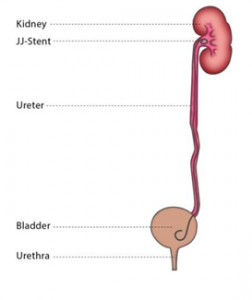
Ureteric Stent
A ureteric stent is a thin, hollow plastic tube that is inserted into the ureter (the tube that connects the bladder to the kidneys). The stent is
held in place by small coils at each end- one coil in the kidney and one
in the bladder.
The purpose of the ureteric stent is to bypass a blockage, which may
have been caused by a stone, narrowing of the ureter, swelling
following an operation, or another medical condition. Unblocking the
kidney allows for urine to flow more freely, preventing the build-up of
pressure that typically causes pain and can damage the kidney.
Having a ureteric stent in place can help to prevent infection and
permanent damage to your kidney.
A ureteric stent is temporary and will not stay in permanently.
Depending on the reason for the stent, it will generally be in place for
between 2-6 weeks.
ABOUT YOUR STENT
- During your procedure a stent was placed with a string attached to the lower end, exiting the body through the urethra and secured with tapeso that you can remove the stent yourself at home
- Specific instructions will be given by your surgeon on when you need to remove your stent. The stent usually remains in for 3-7 days. Please DO NOT remove the stent earlier than you are instructed
- When urinating we suggest sitting down as the urine may spray
- You may notice a small amount of urine leakage due to the string hanging from the urethra. This will resolve once the stent is removed.
- Limit strenuous activity, heavy lifting, and sex as this can move the stent
- When showering and using the toilet be careful with the string that is coming out of your urethra, if you accidentally pull on the string the stent can easily become dislodged
- If the stent becomes dislodged it can cause continuous leakage of urine. If this happens, please wear an incontinence pad and contact your urologist
HOW TO REMOVE YOUR STENT
- Go to the bathroom
- Wash and dry your hands thoroughly
- Hold the string securely, pull firmly but gently, continue pulling until the entire stent is out
- Please take a photograph of the entire removed stent and email this to our rooms [email protected]
WHAT TO EXPECT AFTER YOUR STENT REMOVAL
- Burning and stinging when urinating is common for a few days. This is due to the irritation of the urethra during the procedure, and not usually indicative of infection, unless you are also unwell
- Blood in the urine is common for a few days following the procedure (this may be intermittent) but may take longer to resolve. You should ensure adequate fluid intake
- Urinary frequency and urgency as well as nocturia (urinating at night time) may be present for a few days
WHEN TO CALL YOUR SURGEON OR HEAD TO AN EMERGENCY DEPARTMENT
- If you have a fever, chills or severe pain around the kidney or bladder area
- If you have constant, unbearable pain
- Heavy bleeding or if you are passing blood clots
- If you are unable to pass urine